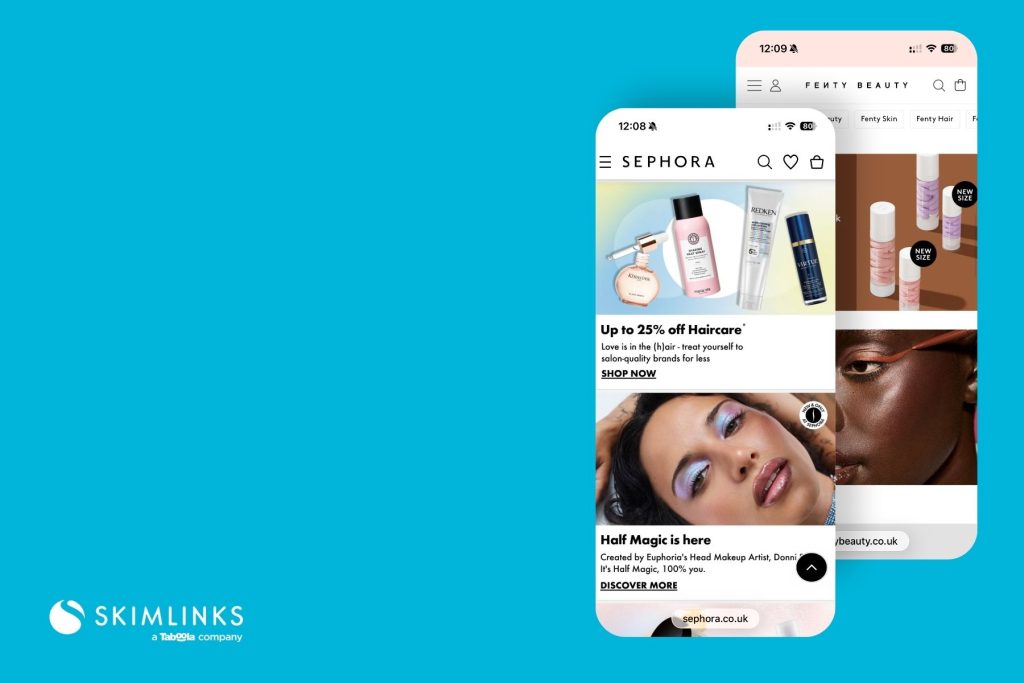
Joining Skimlinks’ Preferred Partner Program is a strong first step, but the brands that see the biggest results are the ones who show up as active partners. Here’s how to make the program work for you.
What Is the Preferred Partner Program?
The Skimlinks Preferred Partner Program is a paid merchant program designed to help brands grow their affiliate revenue.It gives brands structured support, elevated visibility, and direct access to Skimlinks’ network of premium publishers: the editorial titles, deal destinations, and content creators that consumers actually trust when they’re deciding what to buy. Depending on the tier you choose, that means everything from a higher ranking in publisher search results to a dedicated growth manager who actively pitches your brand and helps you scale.
The program runs across three tiers, each designed to meet merchants at a different stage of affiliate maturity:
| Tier | Investment | Key Benefits |
|---|---|---|
| Preferred | From $166 |
|
| Premium | From $1000 | Everything in Preferred plus:
|
| VIP | From $1620 | Everything in Premium plus:
|
Is the Program Right for Your Brand?
The Preferred Partner Program delivers the strongest results for brands operating in categories where Skimlinks has deep, high-quality publisher coverage. These include:
- Fashion & Accessories
- Beauty & Wellness
- Home & Furniture
- Family & Lifestyle
- Fitness & Electronics
- Travel
- Multicategory retailers and marketplaces
Brands outside these verticals can still benefit – but it’s worth having an honest conversation with your growth manager about what’s achievable. If your brand operates in a highly niche space, standalone affiliate activity may have limited reach unless supplemented with a dedicated sponsorship budget. Your Skimlinks growth manager is always here to advise you what strategy might be most appropriate for your goals and budget.
11 ways to maximise your programme performance
Your growth manager will work hard on your behalf – pitching publishers, surfacing opportunities, and optimising your presence across the network. But the brands that see the best results treat the relationship as a genuine partnership. Here’s what that looks like in practice.
1. Offer a competitive commission rate
Commission rate is one of the first things a publisher looks at when deciding whether to feature a brand. If your CPA is below average for your category, it will limit your growth manager’s ability to pitch you effectively regardless of how strong your product is.
Work with your growth manager to understand the benchmark for your sector. If you’re in a position to increase your Skimlinks-specific commission, even temporarily during key periods – it can unlock significant coverage. Think of it as buying shelf space in a premium store.
2. Keep your offers fresh and share them early
Publishers plan content ahead of time. If your offers arrive the day they go live, you’ve already missed the opportunity. The best-performing merchants share upcoming promotions (new collections, seasonal sales, exclusive codes, limited-time deals) with their growth manager in advance, so publishers can plan their coverage.
Stale or frequently-recycled offers are a red flag for editorial publishers in particular. Fresh creative signals that your programme is actively managed and worth featuring.
3. Give publishers angles to work with
A press release is a starting point, but what editorial publishers really need is a story. Think about what makes your brand genuinely interesting right now: a sustainability angle, a founder story, a product that’s gone viral, a collaboration, an award, a trend your range speaks to.
When you share PR angles and editorial hooks with your growth manager, it becomes much easier for them to pitch relevant publishers who write gift guides, trend roundups, or product reviews. The easier you make it to write about you, the more coverage you earn.
4. Aim for above-average CPA performance
Publishers talk to each other, and they’re sophisticated about attribution. A merchant with a strong conversion rate – one that means publishers actually earn well from their traffic, develops a reputation. That reputation compounds over time, attracting more coverage organically.
If your on-site conversion is underperforming, it’s worth addressing alongside your affiliate strategy. A competitive CPA rate combined with a strong conversion rate is the most powerful combination you can offer.
5. Be responsive and collaborative
The merchants who get the most value from the programme treat their growth manager like an in-house member of their marketing team – keeping them informed, looping them in early, and flagging anything that could affect publisher relationships (like commission changes or website issues).
6. Consider a budget for sponsorship placements
Some of Skimlinks’ most influential premium publishers like major editorial titles, high-traffic deal aggregators, and category-leading content brands operate primarily on a tenancy or sponsorship basis. They don’t cover brands on a pure commission model alone; they need a guaranteed commercial relationship.
If you want access to this tier of publisher, a dedicated budget for paid placements is worth building into your affiliate strategy. Think of it as a media buy that also generates affiliate revenue – a hybrid model that can deliver both direct sales and brand awareness.
7. Time your outreach around the editorial calendar
Publishers plan seasonal content months in advance. Black Friday coverage is being planned in August. Valentine’s Day in December. Merchants who share relevant offers and angles aligned to the editorial calendar in advance and not just when they happen to have a sale consistently earn more placements.
8. Offer exclusive deals for Skimlinks publishers
If you can offer a code, deal or CPA that’s exclusive to Skimlinks’ publisher network, it gives publishers a genuine reason to feature you over a competitor and an angle your growth manager can use.
9. Don’t change commission rates without warning
Unexpectedly dropping your CPA rate is one of the fastest ways to lose publisher goodwill and get quietly deprioritised. If a rate change is unavoidable, give advance notice so publishers can plan accordingly.
10. Engage with the data your growth manager shares
If your growth manager sends you performance reports showing which publishers are converting, which aren’t, and where there are gaps – act on it. Merchants who use that data to make decisions (adjusting offers, targeting specific categories) compound their results over time.
11. Build social proof and press coverage
Publishers are more likely to feature brands that already have momentum – press mentions, strong reviews, social following, influencer coverage. If you’re investing in PR or influencer marketing separately, share that with your growth manager. It makes pitching you a much easier sell.
The Bottom Line: Growth Is a Two-Way Street
The Preferred Partner Program gives your brand real advantages – visibility, expertise, and access to publisher relationships that would take years to build independently. But the infrastructure only works when merchants bring the fuel: competitive commissions, timely offers, compelling stories, and a willingness to invest where it counts.
Brands that treat the programme as a passive listing rarely see transformative results. Brands that treat it as an active growth channel that they nurture alongside their growth manager consistently outperform.
If you’re already in the programme and not getting the results you hoped for, the starting point is usually a candid review of the fundamentals above. And if you’re considering joining, the best time to get these building blocks in place is before you launch.
Ready to get more from your affiliate programme?
Talk to the Skimlinks team about joining the Preferred Partner Program and find out how a dedicated growth manager can help you scale your affiliate revenue.